MWP Non-Dendro Proxies #2

OK, I’m starting to get the feel of the new proxy network and have some ideas of what the new Mannomatic is doing. The manouevres have a lot of similarities to the moves in MBH98 and I think that a few main components can be singled out:

1. Once again, as in MBH98-99, the “proxies”, as a network, do not have a strong common “signal” and the HS-ness is contributed by a very small minority of the proxies.

2. In proper data analysis, if one knows that the load is actually carried by a small number of proxies, then the analyst has to put these under the miscroscope to ensure that these are really good proxies – well-studied and endorsed by their original authors as temperature proxies. Once again, we get the opposite. As in MBH98-99, the load-bearing proxies are very problematic and, as previously with the Graybill strip bark chronologies (which remain in use), known defects are ignored using contrived excuses.

3. In this case, Mann notes caveats by the original authors (e.g. Lake Kortajarvi), but, once again, does a typical Mannian calculation, purporting to show that he can get a similar answer without the flawed data, begging the question of why the flawed data was used at all, if it doesn’t “matter”. It’s not as though the selection criteria for this grabbag network are clearly expressed. In this case, pardon me if I assume for now that the flawed data does “matter” as we found out with MBH98, where any attempt to do a sensitivity analysis without the

4. Remember that even Mannian RegEM still results in linear weights for the underlying proxies. So if Mannian EIV, whatever it proves to be, ends up being more-HS like than Mannian CPS in the non-dendro network, as seems to be the case, this merely means that Mannian EIV concentrates the load on the HS-shaped proxies and thus “gets” a more HS-shaped result. Exactly how this is done within the algorithm is unclear right now, but, based on present information, we already know that this happens.

This is precisely the sort of issue that was encountered with Mannian PCA/regression. If more load was placed on the bristlecones, he could “get” a HS. Given the heavy load borne by the bristlecones, any sensible statistical program would then assess whether they were a good proxy. Instead the Team used contrived arguments that given heavy weights to bristlecones was statistically “right” and “proper”.

This is going to go down the same road. The flash figure below (presented in an earlier post) shows standardized versions of the 41 non-dendro series starting on or before 1010 that contribute to the early reconstruction.
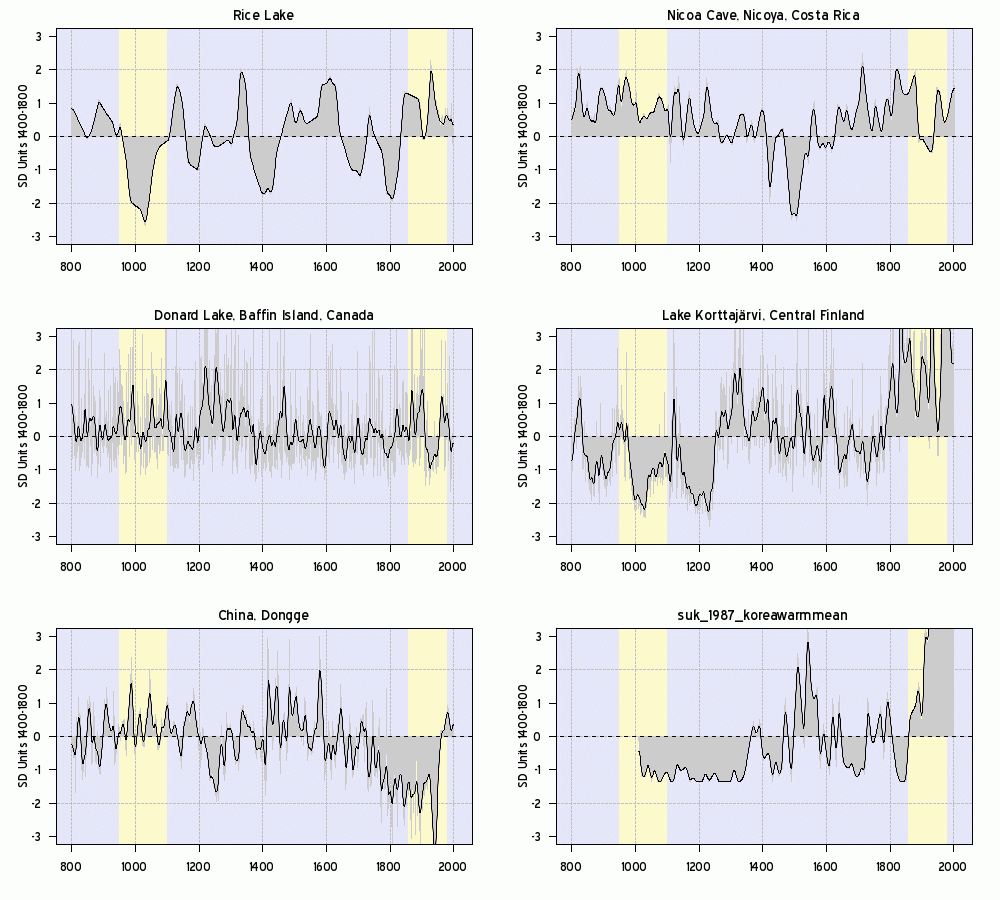
You can see that the following series contribute most of the HS-ness: the 4 Kortajarrvi lake sediment series (all from the same study); 3 Thompson ice core series – Dunde, Huascaran and especially Dasuopu; the Agassix melt series (also an important contributor to Moberg); an unpublished Socotra Island, Yemen speleothen dC13 series and a Scottish speleothem.

If these 11 series receive more weight, you get more of an HS and conversely.

Kortajarrvi
We already have a thread on the Kortajarvi sediments containing observations by two Finns. As noted above, the original paper noted anthropogenic disturbance to the lake sediments – something that is quite common.
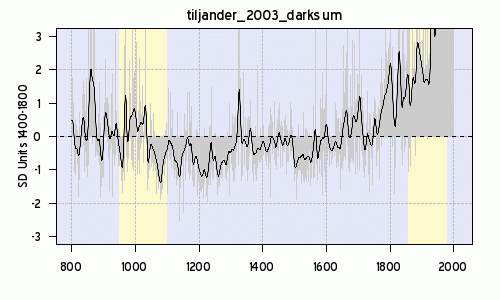

Mann admits problems with this data. So why is it used and not just once, but 4 times? Mann:

we also examined whether or not potential problems noted for several records (see Dataset S1 for details) might compromise the reconstructions. These records include the four Tijander et al. (12) series used (see Fig. S9) for which the original authors note that human effects over the past few centuries unrelated to climate might impact records (the original paper states ‘‘Natural variability in the sediment record was disrupted by increased human impact in the catchment area at A.D. 1720.’ and later, ‘‘In the case of Lake Korttajarvi it is a demanding task to calibrate the physical varve data we have collected against meteorological data, because human impacts have distorted the natural signal to varying extents’). These issues are particularly significant because there are few proxy records, particularly in the temperature-screened dataset (see Fig. S9), available back through the 9th century. The Tijander et al. series constitute 4 of the 15 available Northern Hemisphere records before that point.

In addition there are three other records in our database with potential data quality problems, as noted in the database notes: Benson et al. (13) (Mono Lake): ‘‘Data after 1940 no good— water exported to CA;’ Isdale (14) (fluorescence): ‘‘anthropogenic influence after 1870;’ and McCulloch (15) (Ba/Ca): ‘‘anthropogenic influence after 1870′. We therefore performed additional analyses as in Fig. S7, but instead compaired the reconstructions both with and without the above seven potentially problematic series, as shown in Fig. S8.

Mann’s SI Figure 8 shows no difference with/without these 7 series in the CPS version, but the EIV version is affected. This figure appears to be a splice which hides the impact on the reconstruction using the MWP proxies, which, after all, is the case of interest to readers. SI Figure 8 should be shown using only the MWP proxies, as this is all that are relevant for the MWP-modern estimates.

Secondly, this figure appears to include both dendro and non-dendro proxies. Now much attention has been paid to problems with tree ring proxies, but there is a special issue with the validity of the Graybill bristlecone chronologies, which continue large as life in this study and carry lots of weight in the SI Figure 8 comparison. We know that Ababneh didn’t replicate Graybill’s results at Sheep Mountain, but, instead of using this up-to-date, Mann and Hughes have continued to use the problematic Graybill strip bark series. Even though this issue was raised by the NAS panel, flaccid reviewing failed to pick up even such an obvious point.

If there is a little diversification among the flawed “proxies”, then a few of them can be removed, with others picking up the slack.

In being critical of these particular proxies, I’m not objecting to them merely because they are HS-shaped. What I’m doing is simply isolating the HS proxies for closer scrutiny – a proper data analysis procedure – and checking the underlying literature and rationales. Clearly Kortajarvi and Graybill strip bark are not great great foundations.

What about the other “load-bearing” proxies?

The Thompson Three

We’ve talked previously about the three Thompson ice cores: Dunde, Huascaran and especially Dasuopu.
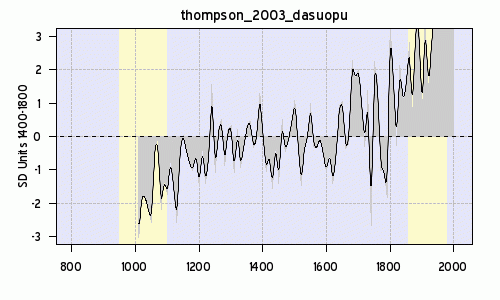
I’ve observed that Mt Logan in the Yukon and Law Dome in Antarctica do not have a HS pattern. Though long versions of both these series are available, Mann doesn’t use them: why? Or for that matter, why aren’t Puruogangri and Bona-Churchill used? Oh that’s right, Thompson hasn’t archived anything for Bona-Churchill yet. I’ve commented on these series in other threads – see the Thompson category and will not do further right now, other than to note that these series are very important in a non-dendro HS through the MWP, especially when the ridiculous Kortajarvi data is removed.


Socotra Island dC13

Without the above 7 series, the HS pickings get pretty slim. Here is the Socotra Island dC13 standardized as before:
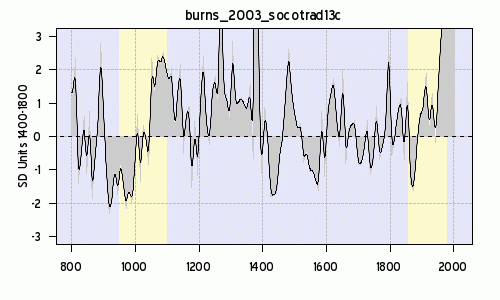
The Socotra Island speleothem results are unpublished for this period. Mann’s reference is to a study that does not discuss or present this information. The data is from Bradley’s group and is not archived. I have seen no evidence that dC13 speleothem values can be relied on as a climatic proxy; there are some caveats in specialist literature against trying to use dC13 for climate. Fleitmann, one of the Socotra Island authors (within Bradley’s group) stated:

d13C values of speleothems are difficult to interpret in terms of climate variability and only a small number of samples show AGLs. Consequently, most of our paleoclimate records in Oman and Yemen are based on d18O alone.

and goes on to say:

Calibration against meteorological observations: A handful of meteorological record is available for Oman and Yemen. Unfortunately, all of these records are geographically widely distributed, generally shorter than 40 years and fragmentary. Due to the lack of meteorological observations, a calibration of our speleothem records is not possible.

This caveat wasn’t a problem for Mann who reported correlations of 0.51 (1850-1996) and 0.71 (1850-1949) for the Socotra Island dC13 record. Mann went on to say:

One advantage of the non-tree-ring proxy series used is that, in most cases, there is little reason to believe a priori that there are any problems with the series that are likely to eliminate the reliability of multicentury to millennial time scale information.

Once again, an assertions made out of thin air. You can’t just say things – they have to be shown with technical reports.

Scotland Speleothem
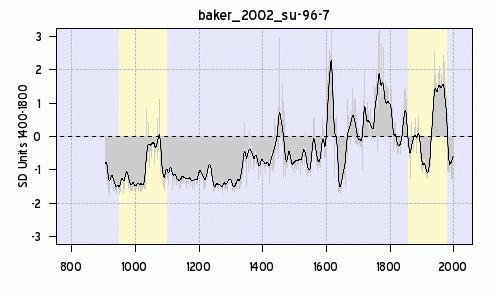
The last one that I’ll comment on briefly today is a Scottish speleothem. Here there seems to be a long-term within the record. I’ve noticed that speleothem data sets sometimes remove such trends as sometimes being due to physical causes – is something like that going on here? This is the sort of thing that Mann et al need to report on.
This is a pretty ragtag collection of proxies upon which to found claims that they can “get” “skilful” reconstructions without Graybill bristlecone chronologies. And oh yes, wouldn’t it be nice if Thompson archived a complete data set – all samples and all measurements – so that a proper analysis of the Thompson Three could be carried out.
Filling in Punta Laguna

Yesterday Mann archived a new version of his data, a version supposedly without any infilling. Gavin Schmidt is pretending that this was there all along and demanding an apology from one of his readers, who had the temerity to question Schmidt.

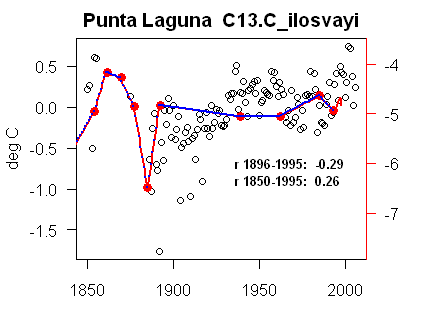
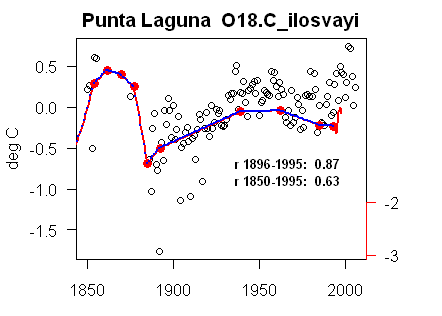
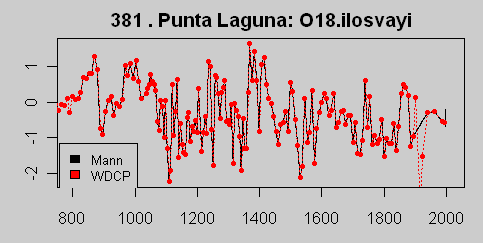
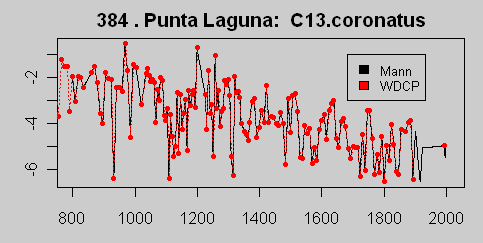
I’ve taken a quick look at the new (Sept 4, 2008) version of Mann’s Punta Laguna and plotted the 4 series below. It sure looks like infilling has taken place for this supposedly “original” data (though this would not be the case for annually resolved data.) The resolution of this data is a little sparser than many other series. This data also has a pronounced MWP depending on whether it’s flipped or not. (Correlation between O18 and temperature for one mollusk species is negative and one is positive, so I presume that Mann flips one of them over, rather than investigating whether the proxy has any merit if different mollusks yield different correlations.

Or perhaps individual mollusks have their own methods of teleconnecting to world temperature – different channels on the telecommunication band. FM88 – the CLAM. Or maybe P coronatus is sort of a guy’s channel, while C iloswegi is a comedy network. Or maybe the opposite. You need special crystals to tune your teleconnections.

Each of the 4 plots show the HadCRU3 gridcell temperature (annual) with the C13 and O18 values for the two mollusk species plotted using the right-hand scale. The solid dots show the actual values from WDCP archive – in each case, there are only 4 values for the entire 20th century (not decadal resolution). I have plotted the “infilled” Mann version in red, with the “original” Mann version in blue. Values from 1993 to 1998 have been removed in the “original” version; otherwise they are identical. [Update: thanks to an observation by Hu McCulloch, see comments below, the graphics below replace an earlier version in which 3 input values went to the wrong column in my read of WDCP data].


Figure 1. The above figures are matched to Mann proxies as follows. 381 – C13.C_ilosvayi; 382- C13.P_coronatus; 383 – O18.C_ilosvayi; 384 – O18.P_coronatus. This has been done based on the following nomenclature in Mann’s script call ids: curtis_1996_d13c, curtis_1996_d13cpyro, curtis_1996_d18o, curtis_1996_d18opyro. “pyro” is believed to be P. coronatus, leaving the ones with no appelation to be allocated to C. ilosvayi.

Update – The above tables hown the reported correlations, which are said to be “significant” even though there aren’t very many values. Here’s what Mann says about this:

we assumed n = 98 nominal degrees of freedom for annually resolved records, and n  8° of freedom for decadal resolution records. The corresponding one-sided P  0.10 significance thresholds are |r| = 0.13 and |r|=0.42 respectively. Owing to reduced degrees of freedom arising from modest temporal autocorrelation, the effective P value for annual screening is slightly higher (P  0.128) than the nominal l p=0.10 value. For the decadally resolved proxies, the effect is negligible because the decadal time scale of the smoothing is long compared with the intrinsic autocorrelation time scales of the data.

These sentences bear some reflection in the context of this and other series.

Mann et al 2008 Proxies

Here are 5 graphics which show all the Mann 2008 proxies in a consistent format, highlighting two periods 950-1100 and 1850-1980. My software only permits 300 gif images per gif-movie, so 5 parts. The graphics show nicely how few series actually have low-freq variability and how few series are really contributing to any HS-ness. The series are shown in the alphabetical order of Mann’s data set. The Luterbacher series include instrumental information and their impact needs to be studied,

Part1 1-299
Part2 – 300-559
Part3- 560-779
Part4- 780-999
Part5 – 999-1209

Individual graphs are located as proxy001.gif-proxy099.gif and proxy0100.gif-proxy1209.gif in the directory http://data.climateaudit.org/data/images/mann.2008

Mann et al 2008: Korttajärvi

Larry Huldén writes:

The Finnish lake sediments can not be used for temperature interpretations in the 18th to 20th century unless you know exactly the history of the regional lake environment conditions. We have 180,000 lakes in Finland. It is very easy to cherry pick among them and say that it is a random sample. Of all lakes, 1,500 lakes are affected by lowering of water levels. These must be omitted. Many other are affected by agriculture including forestry. This affects the relative components of the sediments. This is well known although somebody can by chance use them for climate trends. Finnish prof. Matti Saarnisto has showed me graphs of lake sediments from Finland which can be used for temperature trends but still show strong deviations in the recent 200 years because of agriculture. These lakes are not always very close to agricultural sites.

In addition, we must remember that the fauna or flora in the sediments do not represent the temperature of the air because long term trends in water temperatures do not correlate with long term trends in air temperatures. I had a poster on this phenomenon in Italy in 2001 (or 2002?).

Larry Huldén
Finnish Museum of Natural History

Timo Hameranta writes:

Tiljander et al. discovered “an organic rich period from AD 980 to 1250” that they say “is chronologically comparable with the well-known ‘Medieval Warm Period’.” During this time interval, they report that “the sediment structure changes” and “less mineral material accumulates on the lake bottom than at any other time [our italics] in the 3000 years sequence analyzed and the sediment is quite organic rich (LOI ~20%).” From these observations they conclude that “the winter snow cover must have been negligible, if it existed at all [our italics], and spring floods must have been of considerably lower magnitude than during the instrumental period (since AD 1881),” which conditions they equate with a winter temperature approximately 2°C warmer than at present.

In support of this conclusion, Tiljander et al. cite much corroborative evidence. They note, for example, that “the relative lack of mineral matter accumulation and high proportion of organic material between AD 950 and 1200 was also noticed in two varved lakes in eastern Finland (Saarinen et al. 2001) as well as in varves of Lake Nautajarvi in central Finland c. AD 1000-1200 (Ojala, 2001).” They also note that “a study based on oak barrels, which were used to pay taxes in AD 1250-1300, indicates that oak forests grew 150 km north of their present distribution in SW Finland and this latitudinal extension implies a summer temperature 1-2°C higher than today (Hulden, 2001).” And they report that “a pollen reconstruction from northern Finland suggests that the July mean temperature was c. 0.8°C warmer than today during the Medieval Climate Anomaly (Seppa, 2001).”

Ref: Tiljander, Mia, Matti Saarnisto, Antti E. K. Ojala and Timo Saarinen, 2003. A 3000-year palaeoenvironmental record from annually laminated sediment of Lake Korttajärvi, central Finland. Boreas, Vol. 26, pp. 566–577. Oslo. ISSN 0300-9483, December 2003

Other references of Finnish climate are e.g.

Haltia-Hovi, Eeva, Timo Saarinen, and Maaret Kukkonen, 2007. A 2000-year record of solar forcing on varved lake sediment in eastern Finland. Quaternary Science Reviews Vol. 26, No 5-6, pp. 678-689, March 2007, online http://www.cfa.harvard.edu/~wsoon/BinWang07-d/HaltiaHovietal07-2000yrSolarActivityEastFinland.pdf

Ogurtsov, Maxim G., Oleg M. Raspopov, Samuli Helama, Marku Oinonen, Markus Lindholm, Hogne Jungner, and Jouko Meriläinen, 2008. Climatic variability along a north-south transect of Finland over the last 500 years: Signature of solar influence or internal climate oscillations? Geografiska Annaler, Series A: Physical Geography Vol. 90, No 2, pp. 141-150, June 2008

Timonen, M., Mielikäinen, K., and Helama, S. 2008. Climate variation (cycles and trends) and climate predicting from tree-rings. Presentation at TRACE 2008: Tree Rings in Archaeology, Climatology and Ecology, April 27-30, Zakopane, Poland.

Mann 2008 MWP Proxies: Punta Laguna

I’m spending a little extra time examining the “new” Mann 2008 MWP non-dendro “proxies”. There are 4 series from varved lake sediments in Punta Laguna, Mexico: two dO18 and two C13 series, each for a different gastropod species.

Original data is archived at WDCP here. I compared this data to Mann’s versions and noticed some puzzling differences. The coronatus data (both C13 and O18) contains only one value in the 20th century. Although the Mann version is consistent with interpolation in the pre-modern period, Mann’s modern values contain values that do not exist in the official archive. Where on earth did Mann’s 20th century values come from?

Mann reports flashy correlations for a couple of these series (382, 383) with NA values reported for the other 2 series – I’m not sure why. For 382, Mann’s SI shows correlations for 1850-1995 (0.40), 1896-1995 (0.60) and 1850-1949 (0.52) and for 383, he shows correlations for 1850-1995 (0.63), 1896-1995 (0.8693) and 1850-1949 (0.7467). In the latter series, the underlying data set has reported values for 1893 and 1993 and none in between, so it would be interesting to know how the calibration was done.

The underlying publication only discusses the dO18 series – NOT the dC13 series, and does not interpret them as a temperature proxy. They observe that the O18 variability is much greater than can be accounted for by temperature and hypothesize that changing O18 values correspond to changing circulation patterns, moving zones north and south. This is a theme that is picked up in other studies – I’ve mentioned this in connection with Newton et al 2006 on Pacific Warm Pool proxies, who discusses this.

The original publication clearly marks a MWP, though it ends in the 950-1100 period that is often highlighted by other data. I’m not convinced that a lot of weight can be placed on the author’s dates.
The sediments are dated by 5 dates from terrestrial wood (as there is a large reservoir effect in the gastropod radiocarbon dates) with only 2 dates from the last millennium. Dates are interpolated assuming that each date is exact i.e. varying sedimentation rates. If a uniform rate were assumed (and there are only 5 dates), this would reduce the estimated age of sediments in this period by about 90 years or so and would delay the estimated date of the end of the MWP in this region. (Craig Loehle has always emphasized these sorts of dating issues as a potential source of incoherence.)

It’s hard to develop an objective way of handling such things, as efforts to wiggle match can easily cause one to find what one “Wants” to see. For the present, I merely urge people not to place undue weight on the dates of these squiggles as the dating uncertainties could easily be a century or so.

Reference:
Curtis, J.H., D.A. Hodell, and M. Brenner, 1996, Climate Variability on the Yucatan Peninsula (Mexico) during the last 3500 years, and implications for Maya cultural evolution, Quaternary Research 46: 37-47.

Click to access Curtis_1996_QR.pdf

ftp://ftp.ncdc.noaa.gov/pub/data/paleo/paleolimnology/yucatan/readme_curtis1996.txt
ftp://ftp.ncdc.noaa.gov/pub/data/paleo/paleolimnology/yucatan/puntalaguna.txt

Mann 2008 Non-Dendro MWP Proxies

Once again, Mann has claimed that he can obtain a “reliable long-term record” without tree ring data, a claim that, as previously noted, is eerily reminiscent of a similar untrue claim made 10 years ago.

Ten years ago, we could not simply eliminate all the tree-ring data from our network because we did not have enough other proxy climate records to piece together a reliable global record,” said Michael Mann, associate professor of meteorology and geosciences and director of Penn State’s Earth System Science Center. “With the considerably expanded networks of data now available, we can indeed obtain a reliable long-term record without using tree rings.”

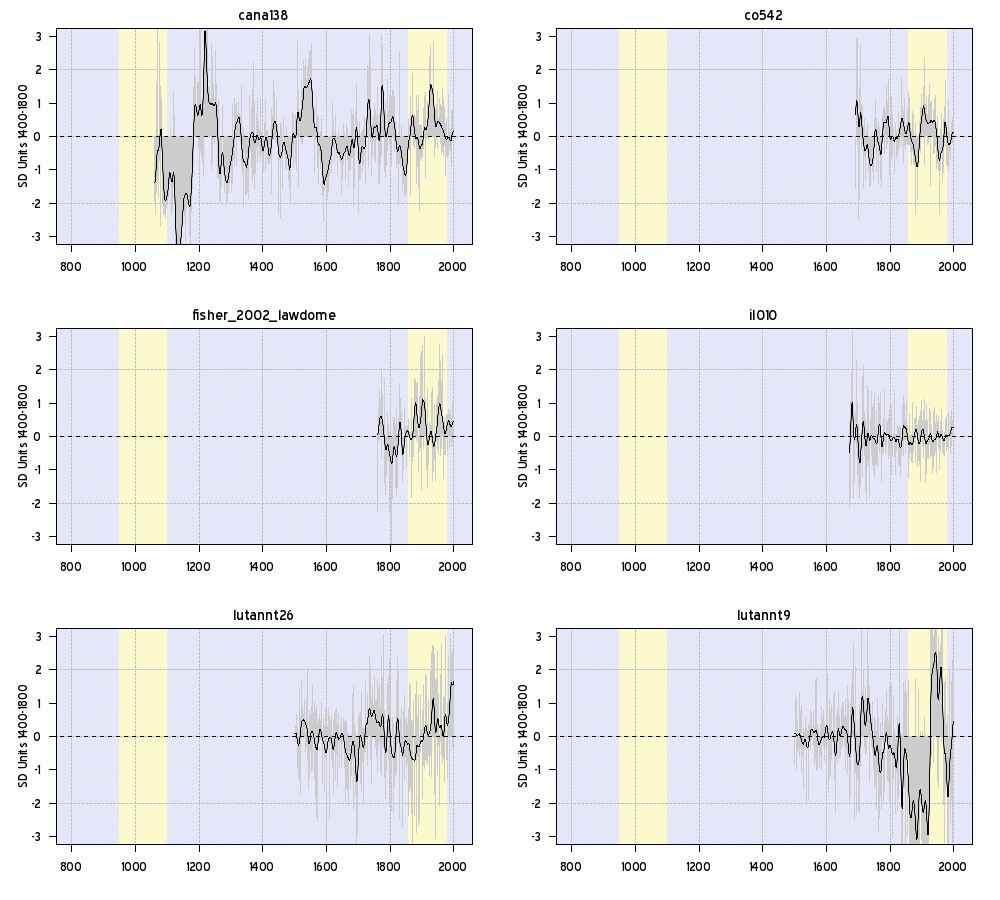
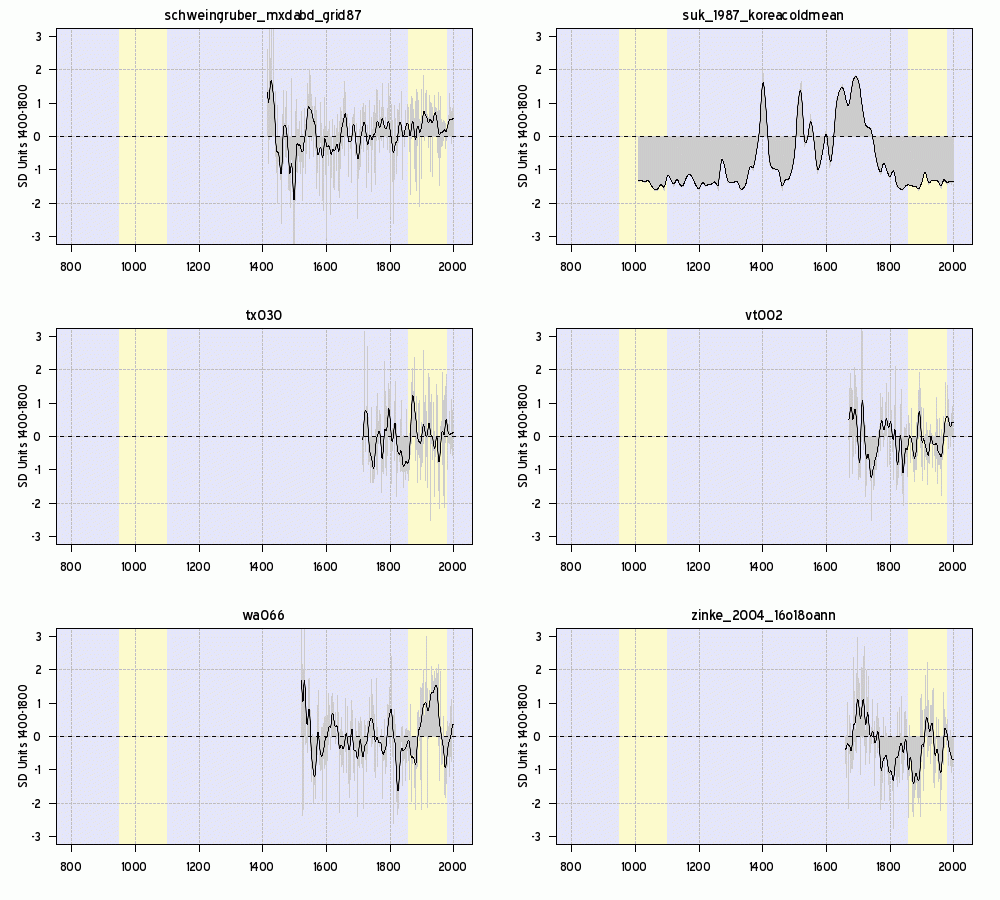
The first thing to look at is always the data. Basketball scouts look at dozens of prospects, so climate scientists should be able to look at 33 proxies. I’ve plotted all 33 proxies in a consistent format below. I’ve highlighted the 950-1100 MWP period and the modern period in the graphics below and standardized all proxies on 1400-1800, choosing this period to avoid incorporating the two extreme periods: I think that this highlights the proxies of interest quite well. As an experiment, I’ve made the proxies into a flash-gif (Thanks to Anthony for advising me on software.) I’ll make a few comments below and plan to continue examining this data.

Mann et al 2008 Non-Dendro Proxies

Mann et al 2008 Non-Dendro Proxies


Figure 1. These are arranged more or less by longitude going east around the world. x-axis dates are Years AD with 950-1100 and 1850-1980 highlighted. y-axis SD units are based on native proxy units standardized on 1400-1980.

Press Release vs Article
The above comments were from the press release. Now look at the article (not available at the time of the press release.) Using CPS methods (which should be sufficient to recover any actual signal), Mann says that a “skilful reconstruction” is possible only back to AD1500 – not even the AD1400 of MBH98, conceding the 15th century period in dispute in our articles. However, Mann then triumphantly announces that he can get a “skilful reconstruction” using a new and improved Mannomatic – in this case, an “EIV method” together with other opague Mannian multivariate operations, a method that you can’t read about in Draper and Smith or other statistics texts. The statistical authority for the method is, needless to say, another Mannian article. Mann et al:

The skill diagnostics (Fig. 2; see also Dataset S4) for the validation experiments indicate that both the CPS reconstructions (with the screened network) and EIV reconstruction (with the full network) produce skillful NH land reconstructions back to A.D. 400. When tree-ring data are eliminated from the proxy data network, a skillful reconstruction is possible only back to A.D. 1500 by using the CPS approach but is possible considerably further back, to A.D. 1000, by using the EIV approach. We interpret this result as a limitation of the CPS method in requiring local proxy temperature information, which becomes quite sparse in earlier centuries. This situation poses less of a challenge to the EIV approach, which makes use of nonlocal statistical relationships, allowing temperature changes over distant regions to be effectively represented through their covariance with climatic changes recorded by the network.

A skillful EIV reconstruction without tree-ring data is possible even further back, over at least the past 1,300 years, for NH combined land plus ocean temperature (see SI Text). This achievement represents a significant development relative to earlier studies with sparser proxy networks (4) where it was not possible to obtain skillful long-term reconstructions without tree-ring data.

There is something eerily similar to an observation in MBH98, where Mann noted in passing that conventional methods had been “ineffective”, but the Mannomatic was just the ticket. Of course, no one then knew exactly what a Mannomatic was (no mention of Mannian principal components or bristlecones), but climate scientists and IPCC loved the answer.

Largely because of the inhomogeneity of the information represented by different types of indicators in a true ‘multiproxy’ network, we found conventional approaches (for example, canonical correlation analysis, CCA, of the proxy and instrumental data sets) to be relatively ineffective. Our approach to climate pattern reconstruction relates closely to statistical approaches which have recently been applied to the problem of filling-in sparse early instrumental climate fields, based on calibration of the sparse sub-networks against the more widespread patterns of variability that can be resolved in shorter data sets. We first decompose the twentieth-century instrumental data into its dominant patterns of variability, and subsequently calibrate the individual climate proxy indicators against the time histories of these distinct patterns during their mutual interval of overlap.

Are we seeing the same thing once again? A new Mannomatic?

A Few Comments on the “Proxies”
I identified 33 non-tree ring proxies with that started on or before 1000 – many, perhaps even most, of these proxies are new to the recon world. How were these particular proxies selected? How many proxies were screened prior to establishing this network? Mann didn’t say. (Mann SI Figure S8 plots 18 of these series (ones going back to 818) – readers should consult this as well.)

One’s first impression is that there isn’t a common signal in this data.

The proxies with the loudest modern warm period “signal” – a Finnish lake sediment, are said by the author to have been contaminated by non-climatic modern disturbance. Mann notes in the SI, referring specifically to these 4 series:

we also examined whether or not potential problems noted for several records (see Dataset S1 for details) might compromise the reconstructions.

This smacks all too much like his attempt to “adjust” the bristlecone data, concocting an “adjustment” that didn’t affect the results. The logical course of action when an author notes such disturbance is simply not to use the data. There are dozens of other unused series. In Mann’s SI Figure 7, he argues that the presence/absence of 7 problematic series doesn’t “matter”. So why use them? And why use 4 of them? It’s definitely fishy.

One of the Socotra Island series has a huge modern increase, not present in another Socotra series – this data needs to be examined. The Agassiz ice core series also has a big difference: it also had a lot of leverage in Moberg.

I’ve already examined the Curtis Punta Laguna data and Mann’s version does not match the public archive. I’ll discuss this separately.

UC on Mann Smoothing

UC writes in that there’s another Mannian problem:

And GRL08 ( http://www.meteo.psu.edu/~mann/shared/articles/MannGRL08.pdf ) is the prologue. Tried this new smoother ( http://www.meteo.psu.edu/~mann/smoothing08/lowpassadaptive.m ) with HadCRUT monthly and f=0.0104,

[smoothedbest,w0,w1,w2,msebest] = lowpassadaptive(HadM, 0.0104);

got this figure,

T1

But the weights are [w0 w1 w2]

ans =

0.4100 0 0.5500

Surprisingly, this does not agree with the text, where constraint sum(w_j)=1 is specified. I guess there’s something wrong with Mann’s exhaustive search,

for weight0=0:0.01:1
for weight1=0:0.01:1.0-weight0
for weight2=0:0.01:1-weight0-weight1

I hope he will fix this soon.

UPDATE Sept 3, 8 am:
It didn’t take long. As noted in a comment below, Mann changed the online code within hours of this being posted at CA to the following (note the difference in the third line). There is no annotation of the change nor credit to CA.

for weight0=0:0.01:1
for weight1=0:0.01:1.0-weight0
weight2=1-weight0-weight1;

Mann et al 2008

Notice of a new reconstruction by Mann and the Team is in many press clippings today, citing a PNAS article that is not (as I write) online. Rather than clutter other threads, here’s a placeholder thread pending my own response which may take a few days.

Update Sep 2, 2008 2:15 pm: Article online here Article is now online here

The most lengthy notice is here. In the pres release, Mann states that tree ring data is inessential to the present reconstruction, unlike the situation 10 years ago:

“Ten years ago, we could not simply eliminate all the tree-ring data from our network because we did not have enough other proxy climate records to piece together a reliable global record,” said Michael Mann, associate professor of meteorology and geosciences and director of Penn State’s Earth System Science Center. “With the considerably expanded networks of data now available, we can indeed obtain a reliable long-term record without using tree rings.”

It’s interesting that Mann characterizes the past studies in this way as the previous studies had, at the time, made pretty specific claims purporting to be robust to the presence/absence of dendroclimatic indicators.

For example, Mann et al 2000 stated:

We have also verified that possible low-frequency bias due to non-climatic influences on dendroclimatic (tree-ring) indicators is not problematic in our temperature reconstructions.

Or here, Mann states:

Whether we use all data, exclude tree rings, or base a reconstruction only on tree rings, has no significant effect on the form of the reconstruction for the period in question. This is most probably a result of the combination of our unique reconstruction strategy with the careful selection of the natural archives according to clear a priori criteria.

Now CA readers know that the presence/absence of tree rings (actually, bristlecones) had a “significant effect” on the AD1400 network – something that Mann knew as well from the analysis in the amusingly titled CENSORED directory (now deleted from his website), but here Mann artfully illustrated the AD1760 network where the results were advantageous. (In a securities offering, disclosure of the adverse AD1400 results would be obligatory, but seemingly not in climate science where authors are apparently permitted to report only results that go their way.)

MBH98 stated:

the long-term trend in NH is relatively robust to the inclusion of dendroclimatic indicators in the network, suggesting that potential tree growth trend biases are not influential in the multiproxy climate reconstructions.

So this isn’t the first time that Mann has claimed that his results are robust to the presence/absence of tree ring data. He is a serial utterer of this particular claim.

As to what’s in the network: a few predictions (and I’ve not seen the article or the data yet.) Here’s an image from the mongaybay article:

1) the entire MBH98 network (415 series) will be in it. This will include the Graybill bristlecone series.
2) the Briffa MXD network (387 series) used in Rutherford et al (some series of which remain unarchived.) These only go back to 1400 or later and don’t affect the MWP
3) the Luterbacher gridded version in Europe
4) Lonnie Thompson’s tropical ice cores
5) miscellaneous series from Mann and Jones

We’ll find out in due course, but squinting at the map, it doesn’t look like there are a lot of MWP proxies or that the proxy versions are going to differ very much from the usual suspects. So we can expect to see:

6) Briffa’s Tornetrask version, NOT Grudd’s
7) Briffa’s Yamal version and NOT the Polar Urals update
8 ) Graybill’s bristlecone version and NOT Ababneh’s

It doesn’t look like there is anything very much from the ocean sediment world.

Overall, I think that the selections are going to prove pretty familiar and that the MWP proxies are going to be the same tired old ones that we’re used to.

Back from Italy

I’m back from Italy and just wrote a post summarizing the trip. Unfortunately the blog crashed when I went to post it and I’ll have to re-write the post.

Anyhow, we had a great trip. I see that Mann et al have a welcome-home present for us. I see that there are press releases announcing the article before it’s even available online. And while mongabay.com was given a preprint, it seems that climateaudit.org wasn’t. I wonder why.

Koutsoyiannis et al 2008, #2

Continuation of Koutsoyiannis et al 2008: On the credibility of climate predictions.